VejrDisplayet
Hjem
Vejr København
VejrRadar
RegnRadar
TemperaturRadar
VindRadar
LynRadar
Vejrnyheder
Artikler om vejret
Udforsk appen
Vejr widget
Kontakt
Apps
Hjem / Anbefalede artikler /

Weather explained: What are weather fronts?

Weather explained
What are weather fronts?

Meteorologists often talk about weather fronts, but what exactly are they, and what do they mean?

A weather front is the boundary where two different air masses meet, typically bringing changes in temperature, wind, and precipitation. There are three main types of fronts: cold fronts, warm fronts, and occluded fronts. Let’s dive into what each one means for our weather, plus an extra look at stationary fronts.

Cold fronts occur when a cold air mass pushes into a warmer one, causing temperatures to drop sharply, winds to pick up, and heavy rain or storms to develop. The air behind a cold front is cooler, drier, and more stable.

In contrast, a warm front forms when a warm air mass moves over a retreating cooler air mass. High-level clouds like cirrus are often the first sign of an approaching warm front, followed by lower clouds and the potential for rain or thunderstorms if the air is unstable. After a warm front passes, temperatures rise, and conditions become more humid.

But it's not just these three fronts. There are other fronts, such as the occluded front and stationary front. Each one presents slightly different atmospheric setups.

For example, the occluded front forms when a cold front overtakes a warm front, lifting the warmer air off the ground. This type of front often brings rain along its boundary, but as it passes, the skies are typically clear, and the air becomes drier. Occluded fronts combine characteristics of both warm and cold fronts, resulting in weather patterns that are generally less intense but can still vary significantly.

A stationary front occurs when neither air mass is strong enough to replace the other, causing the front to stall. This can result in prolonged periods of cloudy skies, along with light rain or snow, depending on the season. Understanding these fronts can help you better anticipate the changes in weather as they approach and linger in your area.

Weather & Radar USA editorial team
Læs også
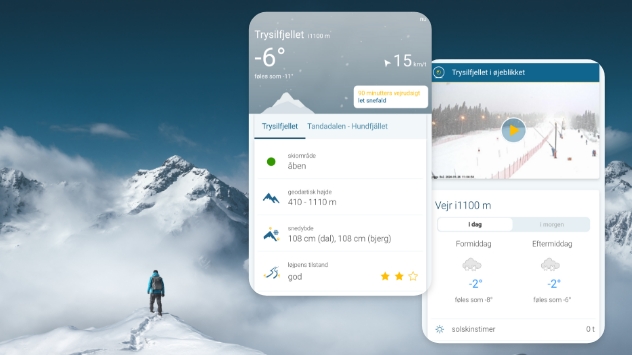
Vejrapp med skivejr og sneforhold i Trysil kombineret med bjerglandskab dækket af sne.
onsdag den 1. april 2026

Tips til skituren

Få styr på vejret før skiferien
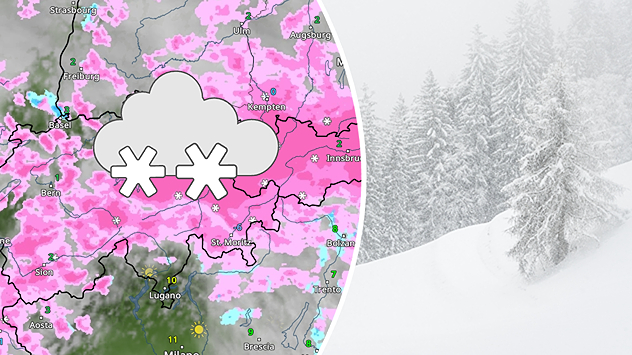
Vejrradar over Alperne med kraftigt snefald kombineret med foto af snedækket skov og vinterlandskab.
onsdag den 25. marts 2026

Masser af nysne

Vintercomeback i Alperne
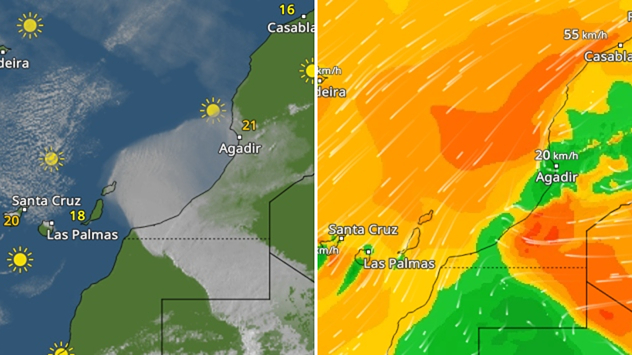
Til venstre: Vejrradar fra mandag aften – Til højre: Den tilhørende vindradar
onsdag den 1. april 2026

Kanarieøerne indhyllet

Sahara-sandstorm former en mur af støv
Alle artikler
Vejr & Radar

Vejr & Radar er også tilgængelig på

Google Play StoreApp Store

Virksomhed

Kontakt Fortrolighedspolitik Impressum Tilgængelighedserklæring

Tjenester

Uploader

Socials

facebookyouTube